Updated October 6, 2026: Completely refreshed with a simple balanced-plate guide, an FAQ, and my own food stories.
This post may contain affiliate links, which means I may earn a commission at no extra cost to you if you make a purchase through one of these links. Thank you for supporting Stay Healthy Get Wealthy!
Do you remember learning about GO, GROW, and GLOW foods in primary school? I certainly do. 😊
GO foods gave us energy, GROW foods helped us build and repair our bodies, and GLOW foods kept us healthy with vitamins and minerals. It was a simple way to teach kids that our bodies need more than one kind of food.
As I got older, I learned that healthy eating involves more than three categories. There is fiber, healthy fats, hydration, portion sizes, and how often we reach for highly processed foods.
Still, that childhood lesson holds up better than I expected. Let’s look at the essential components of a healthy diet and how to put them into practice in everyday life.
The Short Answer
The essential components of a healthy diet are vegetables and fruits, whole grains and other high-fiber carbohydrates, protein, healthy fats, vitamins and minerals, and water. A healthy diet also limits added sugar, too much salt, and highly processed foods.
What Makes a Diet Healthy?
There is no single diet that works the same way for everyone. Your needs depend on your age, activity level, health conditions, culture, and the foods available where you live.
The basics, though, are fairly consistent. A healthy diet gives you enough energy and nutrients, includes a wide range of foods, and keeps foods high in free sugars, sodium, saturated fat, and industrially produced trans fats to a minimum. Nutrition textbooks sum this up as adequacy, balance, moderation, and variety.
In plain words: eat enough, eat a mix, don’t overdo the treats, and don’t eat the same few things every day.
1️⃣ Vegetables and Fruits
If I could convince you to add just one thing, it would be more vegetables and fruits. They supply vitamins, minerals, fiber, and plant compounds, and they make meals more colorful and filling.
Try to bring in different colors through the week:
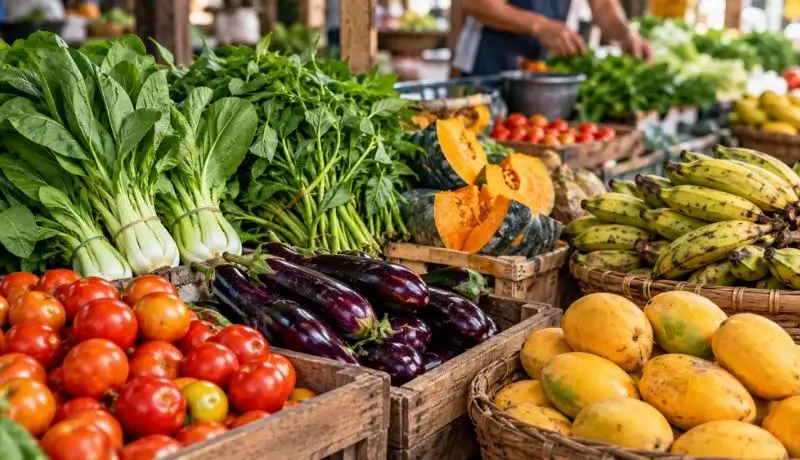
- Leafy greens such as pechay, spinach, kangkong, and malunggay leaves
- Cabbage, broccoli, and other cruciferous vegetables
- Carrots, squash, and other orange and yellow vegetables
- Tomatoes, bell peppers, and eggplant
- Bananas, apples, oranges, berries, and whatever local fruit is in season
The WHO recommends at least 400 grams, or about five portions, of fruits and vegetables a day for adults and for children over ten. That figure doesn’t count starchy roots like potatoes, sweet potatoes, and cassava. You don’t need a kitchen scale for this. Treat 400 grams as a target to aim for, not a test to pass.
2️⃣ Whole Grains and High-Fiber Carbohydrates
I used to have several colleagues who eliminated rice and cut down on bread and pasta. Me? I ate rice once a day with stir-fried veggies, but I often indulged and enjoyed bread and pasta. And they wondered how I remained slim.
I’m not saying that proves anything, and every body is different. But it taught me that the quality and amount of carbohydrates matter more than cutting them out. Your body runs on carbohydrates, and the question is where yours come from.
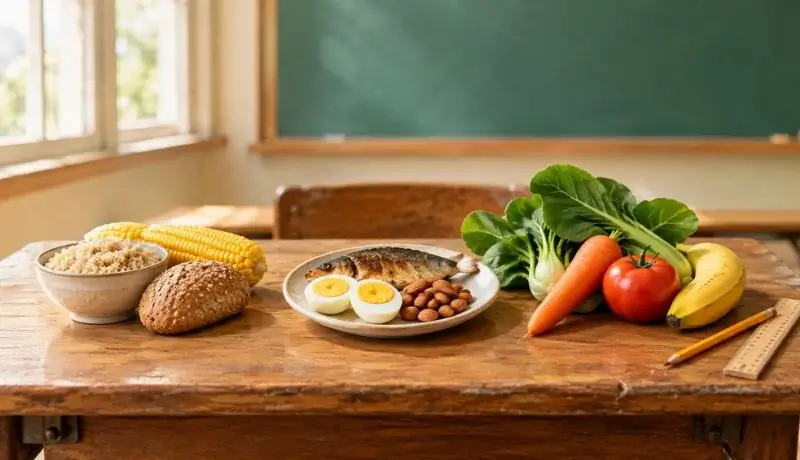
Favor minimally processed, fiber-rich sources such as:
- Oats and brown rice
- Whole-grain bread
- Corn
- Sweet potatoes (kamote) and potatoes with their skin
- Beans and other legumes
- Fruits and vegetables
I also eat more whole-grain bread than I did when I was younger, and these days I honestly prefer it to white bread. Our tastes change as we learn, too.
If you’re curious about low-carb eating specifically, I wrote about it in Can You Really Lose Weight on a Low-Carb Diet?
3️⃣ Protein for Growth and Repair
Protein helps your body build and maintain muscles and other tissues. It is also involved in many important processes throughout the body.
You can get it from animal foods or plants:
- Fish and seafood (galunggong, bangus, sardines, and shrimp)
- Chicken and other poultry
- Eggs
- Milk, yogurt, and cheese
- Beans, lentils, and monggo
- Tofu (tokwa) and other soy foods
- Nuts and seeds
- Lean meats
You don’t need to become a vegetarian to eat more plant protein. Adding monggo, tofu, or a handful of nuts to your week already adds variety. And if you are vegetarian or vegan, you don’t have to pair specific plant proteins at every meal. Eating a varied diet over the day covers your amino acids.
One more thing: as we get older, we tend to lose muscle more easily, so many nutrition experts suggest older adults get somewhat more protein than younger adults, often in the range of 1.0 to 1.2 grams per kilogram of body weight daily.
If you’re over 60 or managing a health condition, ask your doctor or a dietitian for a number that fits you.
4️⃣ Healthy Fats
Fat is not the villain either. Your body needs it for cell structure, hormone production, and absorbing certain vitamins. What matters is the type.
Choose unsaturated fats more often, from sources like:
- Avocados
- Nuts and seeds
- Fatty fish such as salmon and sardines
- Olive, canola, and sunflower oil
Limit foods high in saturated fat and avoid industrially produced trans fats, which turn up in some fried foods and baked goods. A simple swap is cooking with vegetable oil instead of butter or lard.
Portions matter, even with the healthy stuff. I love nuts, but I learned the hard way that too many make my face oily and give me pimples. A serving is about 28 grams, roughly what fits in the palm of your hand. A good reminder that even a good food has a limit.
5️⃣ Vitamins and Minerals
You need vitamins and minerals in much smaller amounts than carbs, protein, and fat, but they’re just as essential. They support your immune system, bones, blood, metabolism, growth, and development.
For most people, the best source is a varied diet: fruits and vegetables, whole grains, legumes, nuts, fish, eggs, and dairy. Different foods bring different nutrients, so you’ll do better with a wide range than by chasing one “superfood.”
Supplements help in certain situations, such as a diagnosed deficiency or pregnancy, but they don’t replace a nutritious diet. If you suspect you need one, talk to a healthcare professional first.
6️⃣ Water and Hydration
Water helps regulate your temperature, move nutrients around, and clear waste. How much you need depends on your activity, the weather, your diet, and your age, so I wouldn’t treat “eight glasses a day” as a rule for everyone. Make water your main drink, drink more when it’s hot or you’re sweating, and remember that fruits and vegetables count toward your fluids too.
Here is where I changed the most. When I was younger, I drank soda regularly, not just on special occasions. Over time, I cut back and reached for water instead. Today, water is my usual drink, and I don’t miss soda much at all.
7️⃣ What to Limit: Added Sugar, Excess Salt, and Highly Processed Foods
Healthy eating isn’t only about what you add. It’s also about what you eat less often. Foods that are high in free sugars, sodium, saturated fat, or trans fats are best kept occasional, including:
- Sodas and other sweetened drinks
- Candy and sugary snacks
- Processed meats and very salty foods
- Fried and heavily processed foods
- Baked goods made with unhealthy fats
I’m not asking you to give these up. I used to fill my plate with chips, fries, chocolates, cakes, ice cream, and soda. At one point, I tried a 100% healthy diet for almost a year and felt great, but I also found out that I could enjoy a treat once in a while without guilt.
Depriving yourself completely usually backfires. What worked for me was keeping fruit within reach (bananas, apples, baby carrots, cucumber) for when a craving hit, and drinking water first. Often the craving faded.
How to Build a Balanced Plate
You don’t need to weigh every gram. Aim for this simple formula:
Vegetables or fruit + a high-fiber carbohydrate + a protein + a healthy fat
A few examples:
- Brown rice + grilled fish + sautéed vegetables + avocado
- Oatmeal + banana + nuts + plain yogurt
- Kamote + eggs + vegetables + fruit
- Beans + brown rice + leafy greens + avocado
- Whole-grain toast + eggs + tomatoes + fruit
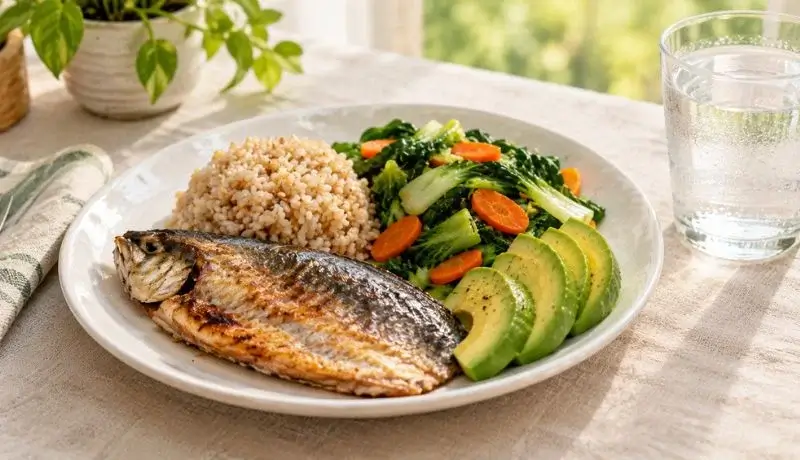
Use foods you already enjoy and what’s available where you live. Eating well doesn’t have to be expensive. My post on meal planning on a budget has more ideas.
A small tool that makes a balanced plate easier
Cooking a little extra rice, vegetables, or protein at the start of the week and keeping it in ready-to-go containers makes a healthy meal much quicker to put together on busy days. If you’re looking for some, this Rubbermaid Brilliance 2-pack of 4.7-cup containers is listed as BPA-free, airtight, and leak-proof, with built-in vents for microwaving with the lid on. The clear containers stack neatly in the fridge and are listed as safe for the dishwasher, microwave, and freezer. The deeper size has room for a full meal, like rice, a protein, and vegetables. I use containers like these for weekday lunches.
As an Amazon Associate, I earn from qualifying purchases.
For reference, the general ranges for healthy adults are about 45-65% of daily calories from carbohydrates, 10-35% from protein, and 20-35% from fat. Those are guidelines, not goals to hit exactly, and your own needs may differ with age and activity.
Healthy Eating Does Not Have to Be Perfect
One meal that isn’t so healthy doesn’t undo everything else you do right. One nutritious meal doesn’t fix the whole week either. What counts is the overall pattern.
So, start where you are. If you usually drink sugary drinks, have water more often. If you eat white bread, try whole-grain. If vegetables are missing from most meals, begin by adding them to one.
5 Simple Ways to Eat Healthier Starting Today
- Add a vegetable to one meal each day.
- Choose fruit when you want something sweet.
- Pick whole-grain options more often.
- Include a protein with your meals.
- Make water your everyday drink.
Frequently Asked Questions
What are the main components of a healthy diet?
Vegetables and fruits, whole grains and fiber-rich carbohydrates, protein, healthy fats, vitamins and minerals, and water, while limiting added sugar, salt, and highly processed foods.
Do I have to cut out rice, bread, or pasta to eat healthy?
No. Choose more whole and minimally processed options when you can, and watch your portions. Plenty of people eat healthy diets that include rice, bread, and pasta.
How much water should I drink a day?
It varies. Activity, climate, diet, and age all play a part. Make water your main drink and drink more when it’s hot or you’re active.
How do I stop craving junk food?
Don’t ban it completely. Keep fruit and other easy snacks around, drink water first, and save treats for when you’ll really enjoy them.
Do I need supplements?
Most people can get what they need from a varied diet. If you think you have a deficiency, see a healthcare professional before taking supplements.
Final Thoughts: Healthy Eating Is a Journey

It makes me smile that my first lessons in healthy eating were just GO, GROW, and GLOW. The more I learn, the more I see how many pieces fit together. For me, eating well isn’t about following the latest diet. It’s knowing what my body needs and finding an approach that fits my everyday life.
I’m still learning, and what I thought was healthy years ago isn’t quite what I believe today. That’s okay. We don’t have to know everything at once. Keep learning, stay curious, and make small choices that help your body grow, move, and live well.
Note: This article is for general information and isn’t a substitute for personal medical or nutrition advice.
I love the breakdown that you have provided of 45 – 65% Carbohydrates, 10-35% Protein and 20-25% fats daily calories needed. This is a great guideline, although sometimes impossible to work out without an app of sorts.
Fats: 20-35% of daily calories.
I was just wondering, as you get older should the protein not get more and the carbs less, as we are more prone to weight gain and muscle loss?
Hi Michel,
Thank you for your insightful comment and for highlighting the macronutrient breakdown from the article.
You’re absolutely correct in noting that as we age, our nutritional needs evolve, particularly concerning protein and carbohydrate intake.
As we age, our bodies become less efficient at processing protein, leading to a condition known as anabolic resistance.
This means that older adults may require more protein to maintain muscle mass and strength. Research suggests that individuals over 60 should aim for a protein intake of about 1.0 to 1.3 grams per kilogram of body weight daily, especially when combined with resistance training.
While carbohydrates remain an essential energy source, it’s beneficial for older adults to focus on the quality of carbohydrates consumed.
Prioritizing complex carbohydrates—such as whole grains, legumes, and vegetables—can provide sustained energy and essential nutrients. Reducing intake of simple sugars and refined carbs can help manage weight and blood sugar levels.
A balanced macronutrient distribution for older adults might look like:
Protein: 30–35% of daily calories
Carbohydrates: 40–45% of daily calories
Fats: 20–30% of daily calories
This balance supports muscle maintenance, energy needs, and overall health.
It’s always advisable to consult with a healthcare professional or registered dietitian to tailor dietary needs to individual health conditions and lifestyle.
Warm regards,
Alice
Thanks for the wonderful breakdown of all of the different essential parts of the diet. Do you have any specific recommendations on keeping track of what I’m eating on a daily basis? I feel like I do a decent job, but I’ve tried a food journal before on paper and had absolutely no luck with it.
I’ve heard there are a few apps and some trackers out there, but do they handle the calorie counting for me or am I still going to have to manually punch every single item in?
Hello Craig,
Tracking your daily food intake is quite a challenge for most people who are trying to live and maintain a healthy lifestyle. What used to work before doesn’t seem to be effective today because we are living in a fast-paced society where everyone seems to be in such a hurry. Keeping a food journal may work for a couple of days but after that we’re back to square one.
The good news is there are now downloadable apps which we can use to track and monitor our daily calorie intake. But instead of enumerating them one by one, why don’t I just give you a link to the Top 5 Best Calorie Counting App.
http://heavy.com/tech/2015/04/top-best-calorie-counter-counting-diet-dieting-fitness-apps-for-iphone-android/
I believe that more people need to take their health far more seriously. I was just reading an article and heart disease is still the number 1 killer in America. Most of these cases could be eliminated by overhauling these peoples’ diets and showing them how to eat properly.
Luckily, you’ve done us all this favor and have put together this excellent article. You’ve done an excellent job of breaking down the proper components and providing there sources.
Personally, I can tell feel the difference in my overall performance when I choose to eat out vs. when I cook for myself at the house. I feel more energetic, more happy, I sleep better, I have healthier and more comfortable bowel movements, and the food I eat is prepared exactly the way I want it to be. Loads of benefits for eating a proper diet.
Also, thank you for clarifying the word ‘healthy’ because too often have I encountered people who are over-eating the foods that are good for you but they negate the benefit by eating them out of proportion.
I find that your ration breakdown is well on point as I am following a diet guideline that allows me to track the macro-nutrients that I am consuming on a daily basis.
I use the 40-30-30 (carbs, fats, proteins) ration and I’ve been able to lose at least 10 lbs a month for the past 3 months with a combination and addition of exercise.
Hey Justin,
Thanks for stopping by. You are an amazing proof that eating a healthy diet in the right proportions really does help lose weight. Although most health and fitness “gurus” advocate staying away from carbs and fats when you’re trying to lose weight or simply want to maintain a healthy weight, I still believe that the best approach is “balance.”
Some people who prefer a certain food, which is a healthy and nutritious one, might go to the extreme of over-eating it and neglect the other components of a healthy diet. Let us always keep in mind that anything consumed in excess and not utilized by the body is converted into energy and stored as fats which results to weight gain.
Preparing your own meal and eating at home is key to a healthy diet because you have full control of the kinds of foods you will consume. Although I myself eat out or go for “take-outs” once in a while I think commercially prepared foods are not the best option when you’re trying to be healthy because aside from not knowing what sort of additives have been incorporated, there’s always this question whether they are nutritious.
Great job following a diet guideline Justin. I wish you nothing but good health; remember that health is wealth.
Hey Alice,
I have been lifting weights for a year now and dieting is one of my hardest problems. This really helps break down the percentages I need to intake daily to reach my goals to staying fit. Nutrition is so important and so difficult to maintain. This post will help me in the future, thank you.
Hey there Patrick, thanks for stopping by.
There are some people who find dieting to be extremely hard compared to weight lifting. But I personally think that dieting is a lot easier especially if you love to play around in the kitchen and experiment on the best healthy foods combination. I don’t believe we have to become strict vegetarians to be healthy; we just need to know the right kinds of foods to eat and eat them in the right proportions.
I have been doing intermittent fasting for over a year and after I read your writing I was wondering that what would be the best time for taking fats?
I go to gym 3 times per week. Do you have any suggestions for me?
Hey Furkan,
Intermittent diet is becoming popular these days especially among those who want to stay fit and healthy without necessarily doing the hard work of exercising or working out. But incorporating a well-balanced diet has proven to be an effective way to stay healthy.
What’s the best time to take in fats? Salmon which is a good source of fats can be eaten for lunch along with a vegetable sandwich or at dinner with some salads. Avocado being one of the healthiest sources of unsaturated fats can be taken for snack or breakfast. I highly recommend eating it on an empty stomach to get the most out of its health benefits. Nuts for people who are always on the go is a good source of fats too.
I do not think there is a specific time when taking healthy fats. Just make sure you eat them at the right proportion.
Knowing the essential components of a healthy diet is so important to our well being. My problem though is the portions. I tend to go over board with fruits and nuts because I know of the health benefits. They are my very favorite. Whenever I gain weight, it’s because I over eat these foods I think. Could you give me a guide on nut portions? I don’t just eat a handful, but twice that, even though I know that I should not eat too much.
Anything in excess is bad. In fact even the healthy stuff can have negative effects if taken in excess because the body is programmed to utilize only certain amounts of every kind of food. Anything ingested that the body doesn’t need is either eliminated as wastes or stored and over time, are converted into fat tissues leading to weight gain, thereby increasing your risk of health problems.
I love nuts too and they are great sources of proteins and healthy fats but consuming them in excess will definitely result to weight gain. I also noticed that eating too much of nuts causes my face to become oily resulting in pimples. The recommended daily intake of nuts is about 28 grams per day which is about as much as it fits in the palm of your hand. They can be a mixture of different nuts or a handful of just one kind.
I hope this helps Carol.
Thank you for breaking down body essentials and defining their beneficial properties. While many articles focus on what to eat, your focus is on why we need to eat them.
Hi Maurice,
Knowing what kinds of foods we need to eat to stay healthy is important but I believe knowing why we should eat them is more important as it will be the driving force and motivation for us to start eating healthy and to keep us stay on track.
Thanks for coming by!
I have recently suffered a heart attack so I have had to watch what I’m eating which I’m finding pretty hard to do, have you got any tips for me so I can stop eating the junk food that I enjoy?
Hi Matthew, junk foods really taste good, don’t they? I used to fill my body with lots of junks too, like chips, fries, chocolates, cakes, ice cream, soda and all other kinds you can think of. I mean, who doesn’t enjoy junk foods? But at what expense? Becoming aware of the bad effects junk foods give to our body and health made me realize that there is actually something I can do about it. Each individual is solely responsible for taking care of their health if they want to enjoy long life.
How did I do it? First off, I do not recommend totally abstaining from junk foods because I believe that depriving yourself will certainly make you want to eat more of them. Instead, I highly recommend eating them in moderation and just once in a while. I actually tried a 100% healthy diet for almost a year and I felt really good about myself. But I also came to realize that I can indulge myself once in a while without feeling guilty about it.
If you’re really keen on eliminating junk foods, you should have an alternative. For instance, you may want to always keep a stock of several varieties of fruits that you can nibble on every time you crave for any unhealthy snacks. Baby carrots, apples, bananas and cucumber are great for snacking. I specifically like bananas because they are sweet and filling. Also don’t forget to drink lots of water because aside from being the healthiest drink, it can also suppress your hunger and cravings.