
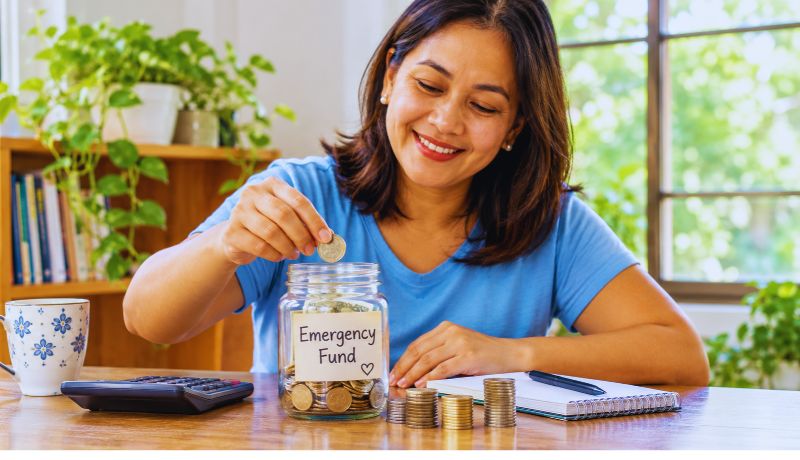
To build an emergency fund on a tight budget, start with a small amount you can repeat, such as ₱100 a week (or the equivalent in your own currency). And keep it in a separate account you don’t use for daily spending.
Aim first for a starter fund of ₱1,000 to ₱2,000, then one month of essential expenses, then three to six months. You don’t need a higher income to begin, but a starting point you can keep up.
I know how hard that can feel. When I started out as a junior Medical Laboratory Scientist in a freestanding laboratory, my salary was modest. My husband also earned from his farm, and we still counted every peso. There were times when I managed to save some money, only to have an unexpected expense come up and use part of those savings.
If you are wondering how to save money for emergencies when every peso (or dollar) is already spoken for, this guide is for you. It won’t tell you that saving is only a matter of willpower, because often it isn’t.
What Is an Emergency Fund?
An emergency fund is money set aside only for expenses you didn’t see coming and can’t put off. It is different from savings for planned purchases, trips, or long-term goals.
You might need it when:
- You lose your job or your income drops.
- A medical or dental bill can’t wait.
- Your car or work vehicle breaks down.
- An essential appliance stops working.
- A storm damages your home.
The fund isn’t about expecting the worst. It gives you something to fall back on, so one bad week doesn’t force you into debt.
The Three-Question Test
Before you touch the fund, ask yourself:
- Is this expense necessary?
- Was it unexpected?
- Does it need to be handled now?
If all three answers are yes, it’s a strong sign that the expense may qualify as an emergency.
Annual insurance premiums, holiday spending, planned home improvements, and routine vehicle maintenance are not. Give those their own savings.
Why Having an Emergency Fund Matters
Even careful planners get surprised. Without a cushion, one setback can ripple through the rest of your budget.
- It keeps you out of unnecessary debt. Borrowing or using a credit card feels like the quickest fix, but interest and repayments add pressure later. Using your own savings can help you avoid the interest charges and repayment obligations that come with borrowing.
- It protects your bigger goals. If you are saving for a house, your child’s schooling, or retirement, a separate fund means an emergency doesn’t raid those savings.
- It buys you time to think. Even a small fund lets you decide calmly instead of scrambling for cash. It won’t solve every problem, but it gives you room to work out the next step.
How Much Should You Save for Emergencies?
The usual advice is three to six months of essential expenses. Those are the costs you must keep paying: rent or housing, utilities, groceries, transportation, insurance, essential medical needs, and minimum debt payments. Add those up, not your whole income.
Here is what that looks like if your essentials come to ₱15,000 a month. Use your own number.
| Savings Goal | Amount |
|---|---|
| One month | ₱15,000 |
| Three months | ₱45,000 |
| Six months | ₱90,000 |
If you are self-employed, have irregular income, or support dependents, aim closer to six months or more.
Don’t let those figures discourage you. A fund this size can feel out of reach, so climb in steps:
- Starter fund: ₱1,000 to ₱2,000, enough for one small surprise.
- ₱5,000: a cushion for a clinic visit or a minor repair.
- One month of essential expenses.
- Three months, then up to six or more if your situation calls for it.
This is how to start an emergency fund without waiting for the “right” time: pick the first step and begin there.
Six Ways to Build an Emergency Fund on a Tight Budget
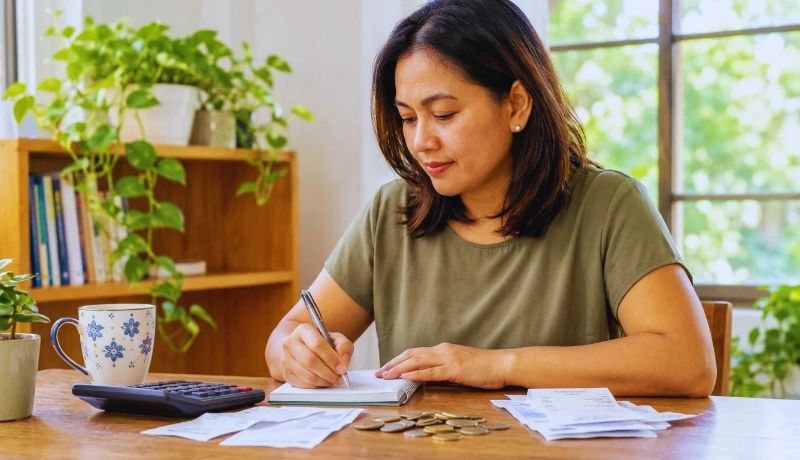
1. Pick an amount so small you can’t say no
One common mistake is setting a savings goal that’s too ambitious and giving up when it becomes difficult to maintain. Choose something that fits your budget, even if it is small, and keep going.
Here is what small amounts add up to:
| Per Week | After 6 Months | After 1 Year |
|---|---|---|
| ₱50 | ₱1,300 | ₱2,600 |
| ₱100 | ₱2,600 | ₱5,200 |
| ₱200 | ₱5,200 | ₱10,400 |
Assumes 26 weekly deposits over six months and 52 over one year, excluding interest.
Some months you will save more and some months almost nothing. That is fine. Return to the habit when your budget allows.
2. Look at where the money actually goes
Write down your bills, groceries, transport, phone and internet, subscriptions, and small daily purchases for one month. Then look for what you can trim without making life harder, such as unused subscriptions, convenience purchases, or items you can compare prices on.
Be honest about the limits. If most of your income already goes to food, housing, and utilities, trimming small expenses may free up very little, and that is not your failure.
3. Pay yourself first, when your budget allows
Move a small amount into savings on payday, if your budget allows, rather than waiting to see what’s left. If your income varies, adjust the amount to what you earned that month. Never take it from money you need for food, utilities, or important bills.
4. Send windfalls to the fund
A bonus, a tax refund, cash gifts, or a year-end payment such as the 13th-month pay in the Philippines can lift the fund quickly. You don’t have to save all of it. Splitting it between savings and a small treat makes the habit easier to keep.
5. Look for realistic ways to earn a little more
When expenses are already lean, income is the other lever. Consider selling unused household items, offering a skill-based service, taking occasional part-time work, or freelancing. Choose what fits your health, your family, and your current job, and put part of whatever you earn into the fund.
6. Keep it separate and track it
A fund you can see is a fund you can protect. Use a dedicated savings account that is safe, easy to reach in an emergency, and separate from your spending account.
- Check for maintenance fees, withdrawal charges, and minimum balance requirements.
- Check deposit insurance. Make sure your bank and account are covered by the appropriate deposit protection scheme. In the Philippines, PDIC insures eligible deposits up to ₱1 million per depositor, per bank. Other countries have their own systems, such as the FDIC in the United States and the FSCS in the United Kingdom.
- Keep the fund out of stocks and other investments that can lose value just when you need the money.
Track your progress in a notebook, a spreadsheet, or an app, and celebrate the milestones: your first ₱1,000, your first ₱5,000, your first month of essentials. Don’t compare your pace with anyone else’s.
What If You Can’t Save Anything Right Now?
Some households have nothing left after the basics. If that is you, you may not be able to build a fund right now, and that is okay.
- Cover essentials first: food, housing, utilities, and necessary transport.
- Don’t borrow just to hit a savings target. That defeats the purpose.
- Start again when things ease. Even ₱50 set aside later is a real beginning.
Getting through a hard season without sliding deeper into debt is an achievement too. Please don’t measure your worth by what you manage to save each month.
What Counts as an Emergency? Two Real-Life Examples
Typhoon and rain damage
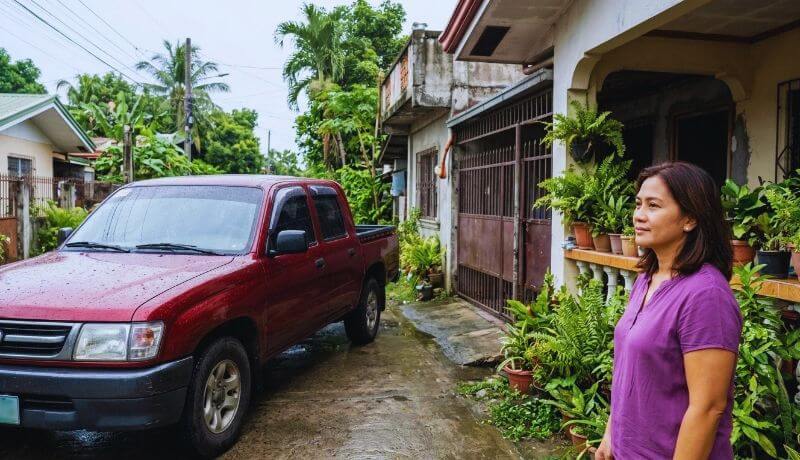
If you live where typhoons and heavy rains are part of the year, you know how fast a house can need repairs. A damaged roof, a leaking ceiling, a broken window, or an urgent electrical fault can arrive with no warning. An emergency fund lets you fix these without rushing to a loan. If your area is prone to severe weather, factor that into how large you make your fund.
A vehicle breakdown
My husband and I know this one firsthand. With fuel prices rising, I once suggested he let our pickup truck sit in the garage for a while. Between rising fuel prices, tire replacements, and other parts that needed attention, maintaining the truck was becoming another expense we had to consider carefully.
It taught me to separate two things. A sudden breakdown on the road is an emergency. Tires, oil changes, and regular servicing are predictable, so they belong in their own small maintenance fund, not in your emergency savings.
Common Emergency Fund Mistakes to Avoid
- Waiting until you earn more. Start with whatever your budget allows today.
- Setting a target that is too big. A goal that feels impossible gets abandoned.
- Using the fund for non-emergencies. Planned and predictable costs need their own savings.
- Keeping everything in cash at home. A little cash on hand is fine, but the whole fund is exposed to theft, loss, and damage.
- Putting the fund into risky investments. It needs to be there, at full value, when you need it.
- Forgetting to refill it. After you use some, make a plan to rebuild.
After You Use Your Fund
Using it doesn’t mean you failed at saving. That is exactly what it is for. Handle the emergency first, then review your budget and start rebuilding with smaller contributions. There is no need to replace it all at once.
Key Takeaway
You don’t need a big income to start an emergency fund. Begin with a small amount you can repeat, such as ₱100 a week (or the equivalent in your own currency). Keep it in a separate account and gradually build toward one month of essential expenses, then three to six months.
A small fund that exists beats a big goal you never start.
Try the free Emergency Fund Planner.
Frequently Asked Questions About Building an Emergency Fund
How much should I put into my emergency fund each month?
There is no single answer. It depends on your income, essential expenses, and responsibilities. Start with what you can realistically afford, even ₱200 to ₱400 a month, and raise it as your situation improves.
How can I build an emergency fund if I live paycheck to paycheck?
First, list your essential expenses and see how much you can safely set aside. If not, cover your basic needs and avoid new debt, then look for realistic ways to earn more when you can. Never save money you need for necessities.
Is ₱500 enough for an emergency fund?
It can cover a small surprise, such as a clinic visit or a minor repair. It won’t cover a hospital bill, a major repair, or a month without income. Treat ₱500 as your first milestone, not your finish line.
Should I pay off debt or build an emergency fund first?
A common rule of thumb: build a small starter cushion first while paying at least the minimum on every debt. Then put extra money toward your highest-interest debt, and return to filling the fund once it is cleared. The cushion keeps one surprise bill from pushing you deeper into debt.
Can I use my emergency fund for household expenses?
Only if the expense passes the three-question test: necessary, unexpected, and needed now. An urgent roof repair after a typhoon qualifies. Routine maintenance, annual bills, and planned improvements are better handled through separate savings.
Final Thoughts: Start Your Emergency Fund This Week
Early in my career, I learned that earning money and keeping it are two different skills. Rising prices and surprise bills can undo even careful budgeting.
But a safety net is built gradually. It doesn’t begin when you have a large balance. It begins the first time you set aside ₱100 and leave it alone.
So, this week, decide on an amount, choose a separate place to keep it, and make the first deposit. Your first emergency fund doesn’t have to be big. It just has to exist.